

Shop By Category


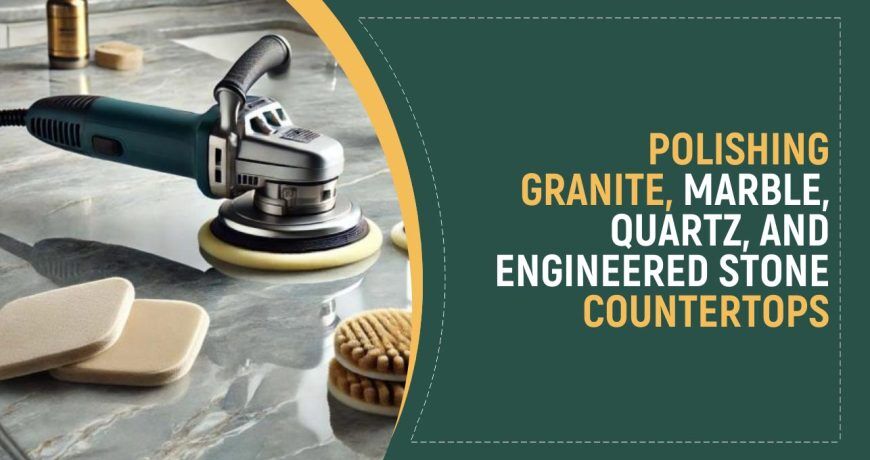
Polishing Granite, Marble, Quartz, and Engineered Stone Countertops: Essential Tools and Techniques for a Flawless Finish
Polishing granite countertops tools are essential for achieving a smooth, glossy, and professional finish on stone surfaces used in kitchens and bathrooms.
Countertops made from granite, marble, quartz, and engineered stone bring elegance, durability, and functionality, but each material has unique characteristics and care requirements. Using the proper polishing tools and techniques can transform dull surfaces into eye-catching focal points while improving resistance to daily wear.
This guide explores the best tools and techniques for polishing different countertop materials, with practical tips for selecting the right polishing granite countertops tools and achieving a professional-grade shine on granite, marble, quartz, and engineered stone.
Best Polishing Granite Countertops Tools for Professional Results
Why Polishing Countertops is Essential for Different Materials
Polishing natural stone or engineered surfaces enhances their aesthetic appeal and helps seal and protect them against scratches, stains, and moisture infiltration. Due to hardness, porosity, and composition variations, each material responds differently to polishing.
- Granite: A durable, naturally hard stone with minimal porosity. Polishing granite enhances its natural gloss, protects it from stains, and helps smooth out minor scratches.
- Marble: Known for its soft, porous nature, marble benefits from regular polishing to protect against etching and staining, especially in kitchens where acidic substances can dull its surface.
- Quartz: Engineered with natural quartz mixed with resin, quartz countertops are non-porous but still benefit from occasional polishing to keep them looking vibrant. Unlike natural stones, quartz does not require sealing.
- Engineered Stone: Often made with a blend of quartz and resin or other materials, engineered stone surfaces are durable and less porous but may require special care to avoid scratching or dulling.
Essential Tools for Polishing Granite, Marble, Quartz, and Engineered Stone Countertops
The right polishing tools is essential for a professional-quality polish on any countertop material. Here are the fundamental tools to consider:
1. Electric or Pneumatic Polisher
A reliable electric or pneumatic polisher is a must-have for polishing stone countertops. Brands such as Alpha® Professional Tools offer professional-grade polishers that provide consistent power and variable speed control, which is crucial for different stages of the polishing process. When choosing a polisher, consider the following features:
- Ergonomic Design: A comfortable grip and balanced weight are essential, as polishing can take time, especially on larger countertops.
- Alpha Electric Wet Polishers
Alpha VSP-340 Variable Speed Polisher
- Variable Speed 700-2500 RPM
- Heavy-Duty Gear System with Step-Down Transmission
- Powerful 3.5 Amp Motor
- 15ft. Flexible All-Weather Water Hose
- 15ft. Electrical Power Cord Has An Inline GFCI
- EasyOn-EasyOff Sleeve Improves Maneuverability
- Adjustable Splash Guard
- Alpha Electric Wet Polishers
ALPHA Wet Polisher AWP 158
- Flexible rubber splash guard and caster assembly for extra stability while polishing flat areas.
- The AWP 158 features several improvements over previous generations of polishers.
- In addition to the increased power and spindle speed, there are two types of handles included: a side handle for edge profiling and polishing and a “C” handle for core drilling and flat surface polishing.
- There is a flat polishing caster designed to improve stability during scratch removal operations for a better final finish.
- Center water-feed and water supply with convenient garden hose attachment.
- All these components are packed in a handy carrying case suitable for transporting and storing
- Alpha Pneumatic Tools
ALPHA PSP-158/114 High-Performance Polisher
- Next Generation Polisher from Alpha®
- High-Performance Industrial Pneumatic Polisher
- Powerful New Motor for Demanding Applications
- Comes With 30′ Kink-Free Twin-Air/Water Hose for Better Maneuverability
- All-Weather Hoses with Flexibility Down To -40°F Or +140°F (-40°C Or +60°C)
- Quarter-Turn Switches for Precise Control
- Central Water-Feed System Delivers Ample Water Regardless of Position
- Diamax Pneumatic Tools
Cyclone MVP Pneumatic Air Polisher
- The automatic oil injection system of the Cyclone Pneumatic Wet Polisher MVP sprays a fine mist of oil over time, which guarantees it will never lose power
- Max RPM 5,500, recommended RPM 5,000
- First air polisher ever to be completely assembled by hand
- Will not lose power even when pushing hard on the stone


2. Diamond Polishing Pads
Diamond polishing pads are the primary tools for polishing natural and engineered stones. These pads are available in a range of grits suitable for removing surface imperfections, smoothing, and polishing.
- Coarse Grits (50–200): These grits initially remove scratches and prepare the surface. They are essential for harder stones like granite and engineered stone.
- Medium Grits (400–800): These are ideal for leveling the surface after using coarse grits. They smooth out inconsistencies and set the stage for finer polishing.
- Fine Grits (1500–3000): These ultra-fine pads are perfect for achieving a glossy finish on marble and granite. Fine grits are generally avoided on softer engineered stones to prevent over-polishing.
- Buffing Pads: Buffing pads bring out the final gloss, especially on granite and marble, providing that coveted mirror-like shine.
- Wet Polishers By Diamax
Cyclone Wet Polishing Disks Superflex Series
- Premium Wet Polishing Disks, ideal for Granite, Marble and Engineered Stone
- Conveniently available in 3″, 4″, and 5″, with Grits that range from 50 to 3,000, plus Black and White Buffs
- Durable and high-performing against the top brands in the industry
- Gains flexibility after continual use
- 4,000 MAX RPM
- 3mm Superflex tread
- Wet Polishers By Diamax
Hurricane ES White 3-Step Polishing System
- For the 4″ System, there is a Step #0 to remove deep scratches
- Provides all the great features of the Cyclone version at an economical price level
- Outperforms other industry brands at the same price point level
- More forgiving when polishing engineered stone with minimal water
- Increased flexibility for tight corners & contoured edges
- 4,000 maximum RPM for the 4″ Pads, 3,000 for the 5″
- For Wet use only
- Dry Polishers By Diamax
Dryflex Polishing Disks
- Designed for craftsmen who really take pride in their work and tools
- 4,000 & 5,000 grits with a trickle of water are the best final Buffs
- Excellent set of Pads to have at the job site for quick touch-ups
- Gain flexibility after continual use
- No worries about the quality of work going out of your Shop because of pad issues
-
3. Polishing Compounds for Different Materials
Each stone material has unique characteristics, so selecting the right polishing compound is essential for an optimal finish:
- Granite Polishing Compound: This compound contains micro-abrasives designed for the hard surface of granite, helping to enhance its natural shine.
- Marble Polishing Compound: This compound is formulated specifically to restore the delicate shine of marble, a softer and more porous stone that can etch easily.
- Quartz Polish: Quartz compounds are resin-based and work to restore the surface’s luster without scratching the stone.
- Engineered Stone Polishing Compound: Designed for quartz and other engineered stones, these compounds often include fine abrasives to avoid damaging the surface.
-
- Color Enhancers by Tenax, Waxes & Polishers by Tenax
Tenax Lustro Italiano Quartz Polish and Enhancer
 Color Enhancers by Tenax, Waxes & Polishers by Tenax
Tenax Lustro Italiano Quartz Polish and Enhancer
Tenax Lustro Italiano Quartz Polish and Enhancer is a surface treatment that can be used on a variety of engineered stone surfaces to enhance the color of the stone
 Indoor
 Walls & Floors
 Ordinary Maintenance
 Food Contact Approved
QUARTZ -

4. Microfiber Cloths and Applicator Pads
Microfiber cloths and applicator pads are ideal for applying polishing compounds and buffing surfaces without scratching or leaving streaks. Microfiber is non-abrasive and is particularly useful for the final cleanup after polishing.
-
- Dry Polishers
Alpha Felt Wheels
- Designed for Use with Polishing Powders, Pastes or Bars
- Very Durable – Holds Up To Acidic Compounds and Heat Generated During Final Polishing
- Hook and Loop Backed Buffing Wheels
- 1/4” Thick with The Perfect Degree of Hardness Versus Softness
- Available in 3”, 4”, 5” and 7″ Sizes
- Very Popular Material for The Final Buff Process with Fabricators and Monumentalists
- Can Be Used for Floor Polishing Applications

5. Sealant for Natural Stone
Applying a stone sealant for natural stones like granite and marble protects the polished surface. Sealants fill the pores of natural stone, preventing moisture and stains from penetrating. Quartz and most engineered stones do not require sealant, as they are non-porous.
In the following categories, you will find everything you need for a flawless finish:
- Sealers & Impregnators by Tenax
Tenax Proseal
Tenax Proseal impregnating sealer is rated by fabricators as one of the best granite, marble, stone sealers to be used on natural stone. No other sealers will penetrate and protect as well as Proseal.
Indoor Enhancer
 Low Yellowing
 Anti-Graffiti
 Solvent-Based
 Natural Effect
STONE -
- Sealers & Impregnators by Bellinzoni, Akemi and Others
TSI 100 Impregnator For Natural Stone
TSI 100 Impregnator For Natural Stone
(Oderless Fluoropolyner)
- TSI 100 is formulated for the protection of natural stone and additional substances.
- TSI 100 penetrates into the pores of the treated surface to form a barrier that is resistant to mositure and stains while allowing complete vapor transmission.
- Basic uses include interior and exterior, vertical and horizontal surfaces, kitchens, showers, restrooms, patio, freeze/thaw areas, stucco finishes, driveways, garages and pool areas.
- Gallon covers 700 – 1000 Sq. Ft.
Why Polishing Countertops is Essential for Different Materials
Polishing natural stone or engineered surfaces enhances their aesthetic appeal and helps seal and protect them against scratches, stains, and moisture infiltration. Due to hardness, porosity, and composition variations, each material responds differently to polishing.
- Granite: A durable, naturally hard stone with minimal porosity. Polishing granite enhances its natural gloss, protects it from stains, and helps smooth out minor scratches.
- Marble: Known for its soft, porous nature, marble benefits from regular polishing to protect against etching and staining, especially in kitchens where acidic substances can dull its surface.
- Quartz: Engineered with natural quartz mixed with resin, quartz countertops are non-porous but still benefit from occasional polishing to keep them looking vibrant. Unlike natural stones, quartz does not require sealing.
- Engineered Stone: Often made with a blend of quartz and resin or other materials, engineered stone surfaces are durable and less porous but may require special care to avoid scratching or dulling.
Essential Tools for Polishing Granite, Marble, Quartz, and Engineered Stone Countertops
The right polishing tools is essential for a professional-quality polish on any countertop material. Here are the fundamental tools to consider:
1. Electric or Pneumatic Polisher
A reliable electric or pneumatic polisher is a must-have for polishing stone countertops. The polisher provides consistent power and allows for variable speeds, which is crucial for different stages of the polishing process. When choosing a polisher, consider the following features:
- Variable Speed Control: A polisher with variable speeds is ideal because lower speeds are better for softer stones like marble. In comparison, higher speeds work well for harder materials like granite and engineered stone.
- Ergonomic Design: A comfortable grip and balanced weight are essential, as polishing can take time, especially on larger countertops.
2. Diamond Polishing Pads
Diamond polishing pads are the primary tools for polishing natural and engineered stones. These pads are available in a range of grits suitable for removing surface imperfections, smoothing, and polishing.
- Coarse Grits (50–200): These grits initially remove scratches and prepare the surface. They are essential for harder stones like granite and engineered stone.
- Medium Grits (400–800): These are ideal for leveling the surface after using coarse grits. They smooth out inconsistencies and set the stage for finer polishing.
- Fine Grits (1500–3000): These ultra-fine pads are perfect for achieving a glossy finish on marble and granite. Fine grits are generally avoided on softer engineered stones to prevent over-polishing.
- Buffing Pads: Buffing pads bring out the final gloss, especially on granite and marble, providing that coveted mirror-like shine.
3. Polishing Compounds for Different Materials
Each stone material has unique characteristics, so selecting the right polishing compound is essential for an optimal finish:
- Granite Polishing Compound: This compound contains micro-abrasives designed for the hard surface of granite, helping to enhance its natural shine.
- Marble Polishing Compound: This compound is formulated specifically to restore the delicate shine of marble, a softer and more porous stone that can etch easily.
- Quartz Polish: Quartz compounds are resin-based and work to restore the surface’s luster without scratching the stone.
- Engineered Stone Polishing Compound: Designed for quartz and other engineered stones, these compounds often include fine abrasives to avoid damaging the surface.
4. Microfiber Cloths and Applicator Pads
Microfiber cloths and applicator pads are ideal for applying polishing compounds and buffing surfaces without scratching or leaving streaks. Microfiber is non-abrasive and is particularly useful for the final cleanup after polishing.
5. Sealant for Natural Stone
Applying a stone sealant for natural stones like granite and marble protects the polished surface. Sealants fill the pores of natural stone, preventing moisture and stains from penetrating. Quartz and most engineered stones do not require sealant, as they are non-porous.
In the following categories, you will find everything you need for a flawless finish:

Step-by-Step Guide to Polishing Different Types of Stone Countertops
Step 1: Clean the Surface Thoroughly
Begin by cleaning the countertop with a pH-neutral stone cleaner suitable for the specific material (granite, marble, quartz, etc.). This step removes any dirt, grease, or residue, ensuring a smooth and even polishing.
Step 2: Start with Coarse Diamond Pads for Granite and Engineered Stone
Attach a coarse diamond pad to the polisher and set it low to medium speed. Granite and engineered stone can withstand coarse grit pads (50–200) without damage. Start with a medium grit (400) for marble to avoid excessive abrasion.
Step 3: Switch to Medium Grit Pads for Smoothing
After removing surface imperfections with coarse grits, switch to medium-grit pads (400–800) to smooth the stone. This step prepares the stone for a finer polish and helps level the surface.
Step 4: Use Fine Grit Pads for a Polished Shine
Fine-grit diamond pads (1500–3000) will bring out the natural shine of granite and marble. Quartz and some engineered stones typically do not require high grits, as over-polishing may dull the resin in these materials. Work carefully and gradually to achieve a smooth, consistent finish.
Step 5: Apply Polishing Compound According to Material
Attach a buffing pad and apply the appropriate polishing compound. Granite polishing compounds add extra depth to the shine, while marble compounds protect the delicate surface. Quartz polish enhances the surface without scratching or dulling it. Set the polisher to a low speed and apply the compound in small sections, buffing in circular motions.
Step 6: Buff and Clean with Microfiber Cloths
After polishing, use a clean microfiber cloth to remove any remaining residue and achieve a streak-free finish. This step ensures no polishing compound or dust is left on the countertop.
Step 7: Apply Sealant for Granite and Marble
Natural stones like granite and marble benefit from a layer of sealant, which protects the stone from moisture, stains, and bacteria. Apply the sealant according to the manufacturer’s instructions, let it sit for the recommended time, and then buff with a microfiber cloth. Due to their non-porous surfaces, quartz and engineered stone typically do not need a sealant.
Maintenance Tips for Different Countertop Materials
- Clean Spills Promptly: Natural stones, especially marble, are susceptible to staining and etching from acidic substances. Quartz and engineered stones are more stain-resistant but can still benefit from prompt cleaning to avoid buildup.
- Use pH-Neutral Cleaners: Avoid harsh chemicals or acidic cleaners on any stone countertop, as they can damage the polish and, in some cases, the surface.
- Use Trivets for Hot Items: Although quartz and engineered stone are heat-resistant, excessive heat can discolor or damage the resin. For granite and marble, sudden temperature changes can lead to cracking.
- Avoid Abrasive Cleaning Tools: Use soft cloths or sponges to clean countertops, as abrasives can scratch and dull polished surfaces, especially on softer stones like marble.
- Polish Regularly: Polishing once every few months helps maintain a high-gloss finish on natural stone. Engineered stones may only need a light polish occasionally, as they are designed to retain their finish longer.
Frequently Asked Questions
What are the essential tools for polishing granite countertops?
Essential tools for achieving a high-quality polish on granite include an electric or pneumatic polisher with variable speeds, diamond polishing pads in various grits, a granite-specific polishing compound, microfiber cloths, and an appropriate stone sealant. These tools ensure a professional, long-lasting finish.
Can I use the same polishing tools on granite, marble, quartz, and engineered stone?
While many tools, such as diamond polishing pads and polishers, can be used across different materials, the techniques and grits required vary. For example, granite can handle coarser grits, while marble needs a gentler approach with finer grits. Quartz and engineered stones, which contain resin, also require different compounds and methods to avoid over-polishing.
How do I choose the right diamond pad grit for each material?
Each material has its ideal grit range. Granite can start with coarse grits (50–200) for scratch removal, moving to medium and fine grits (up to 3000) for polishing. Marble typically begins with medium grits (400) and goes finer to avoid excessive abrasion. Quartz and engineered stone often require finer grits, focusing on polishing compounds rather than abrasive grits to avoid damaging the resin.
Do all countertop materials need sealant after polishing?
Not all materials require sealing. Granite and marble benefit from a sealant to protect against stains and moisture. Quartz and engineered stones are non-porous and generally do not require sealing; however, some fabricators may apply a sealant to add an extra layer of protection for high-traffic areas.
Is it safe to use acidic cleaners on polished stone surfaces?
No, acidic cleaners should be avoided on all polished stone surfaces, especially marble, as they can cause etching and dull the finish. Instead, use pH-neutral or stone-specific cleaners to protect the polish and preserve the surface.
How often should I polish and seal granite, marble, quartz, and engineered stone?
Granite and marble countertops generally benefit from polishing every few months and resealing annually, depending on usage. Quartz and engineered stones require less frequent polishing as they retain their finish longer and do not need sealing due to their non-porous nature.
What is the difference between polishing compounds for granite, marble, and quartz?
Granite polishing compounds contain abrasives suitable for hard surfaces, enhancing depth and shine. Marble compounds are designed for softer stones and often include ingredients to protect against etching. Quartz polish is resin-based, enhancing the shine without scratching or dulling the resin content in quartz surfaces.
How can fabricators avoid dulling engineered stone surfaces during polishing?
To avoid dulling, use lower grit diamond pads sparingly and focus on using polishing compounds rather than abrasive grits for engineered stone. Over-polishing can dull the resin in quartz and other engineered stones, so using finer grits and a gentle approach is best.
Why is variable speed critical on a polisher for stone surfaces?
Variable speed control allows fabricators to adjust the intensity according to the material. Higher speeds are ideal for harder stones like granite, while lower speeds work better for softer stones like marble to avoid scratching or damaging the surface. This flexibility is key to achieving an even, high-quality polish across different materials.
What is the best method for removing scratches from granite or marble countertops?
For granite, start with a coarse diamond pad (50–100 grit) to sand down deeper scratches, then progress to medium and fine grits to smooth the surface. Use a medium grit (400) for marble and work gently to avoid damaging the soft stone. Always finish with fine grits and a polishing compound to restore the shine.
Do quartz and engineered stone require any special maintenance beyond polishing?
Quartz and engineered stones are relatively low-maintenance but can benefit from periodic cleaning with non-abrasive, stone-safe cleaners. These surfaces are resistant to stains and do not require sealing. However, using a dedicated quartz polish occasionally can enhance their appearance and keep them looking vibrant.


