



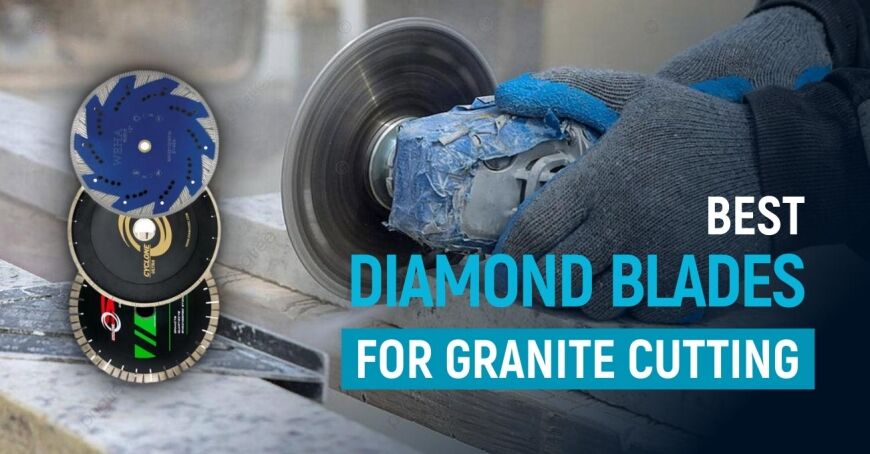
Best Diamond Blades for Granite Cutting
Are you in search of the best diamond blades for granite cutting? Look no further. This article will guide you through the top-rated diamond blades that will ensure precise and efficient granite cutting. Whether you are a professional contractor, stone workshop, or working with marble, granite, or other rigid materials, having the right tools is essential for achieving precise and efficient cuts. The choice of a diamond blade can make a significant difference in the quality of the cuts, the speed of the job, and even the longevity of the tools you use. Not all diamond blades are created equal—some are designed specifically for wet or dry cutting, while others are better suited for continuous or segmented cuts.
In this guide, we’ll explore the importance of selecting the best diamond blade for granite cutting, considering factors like blade type, cutting method, and compatibility with various tools. Choosing the right diamond blade ensures clean, chip-free cuts and extends the blade’s lifespan and your cutting equipment.
We’ll also recommend the top diamond blades available on the market today, compare their key features, and offer expert tips for making the most of your investment. This guide will help you find the perfect diamond blade for your stone-cutting needs. Let’s dive in and explore the best options available.
Comparison of Diamond Blades
When selecting the best diamond blade for granite cutting, consider factors like performance, durability, price, and specific features that align with your cutting needs. Below, we’ve compared some of the top diamond blades available on the market, listing their pros, cons, and specifications to help you make an informed decision.
1. Continuous Rim Diamond Blades
- Description: Continuous rim blades feature a smooth, uninterrupted edge, making them ideal for wet-cutting applications where smoothness is critical.
- Pros:
- It produces clean, chip-free edges that are perfect for intricate cuts.
- Excellent for wet cutting, reducing dust and friction.
- Longer lifespan due to reduced heat generation when used with water.
- Cons:
- Slower cutting speed compared to segmented blades.
- It is not suitable for dry cutting as it requires water for optimal performance.
- Best For: Professionals who need smooth, precise cuts for countertops or detailed granite projects.
2. Tuck Point Diamond Blades
- Description: uck point blades are specially designed for removing old mortar between bricks, stone, or other masonry materials. They feature a thicker, diamond-coated edge to grind out mortar without damaging surrounding bricks.
- Pros:
- Precise removal of mortar for brick and stone restoration work.
- Durable and built to handle heavy grinding tasks.
- Minimizes damage to adjacent materials during removal.
- Cons:
- Not suitable for cutting through stone or granite slabs.
- Limited application compared to general-purpose blades.
- Best For: Masons and contractors needing to remove old mortar from between bricks or stones for restoration work.
3. Turbo Rim Diamond Blades
- Description: Turbo blades feature a serrated rim design that allows for faster cuts than continuous rim blades while maintaining relatively smooth edges.
- Pros:
- Balances cutting speed with precision, making it versatile for various granite cutting applications.
- Improved airflow for cooling makes it suitable for wet and dry cutting.
- It offers reasonable control over cuts, making it suitable for curved or shaped cuts.
- Cons:
- Slightly more expensive than standard segmented blades.
- It may not achieve the same level of smoothness as continuous rim blades for delicate work.
- Best For: Those needing a versatile blade for rough and precise cuts, suitable for various granite cutting tasks.
4. Silent Core Diamond Blades
- Description: Silent core blades are designed with a noise-dampening core, reducing noise levels during cutting—ideal for indoor projects and noise-sensitive environments.
- Pros:
- Significantly reduces noise, making it more comfortable for prolonged use.
- Provides a smooth finish similar to continuous rim blades.
- Reduces vibrations, offering more control during cuts.
- Cons:
- Higher cost compared to other blade types.
- They are not as widely available as standard diamond blades.
- Best For: Indoor projects where noise levels are a concern, such as residential renovations.
Contour Diamond Blades
- Description: Contour blades are designed to cut curved lines and circular patterns in stone materials like granite.
- Pros:
- Ideal for creating sink cutouts and curved edges.
- Offers precision for intricate designs that standard blades can’t achieve.
- Can handle tight radius cuts without chipping.
- Cons:
- Slower cutting speeds due to specialized use.
- It requires more skill and control to be used effectively.
- Best For: Fabricators needing to cut curves and round shapes in granite countertops.
5. Marble Diamond Blades
- Description: While specifically designed for marble, these blades can also be effective on softer granites, providing a smooth finish.
- Pros:
- Extremely smooth cut, reducing the need for edge finishing.
- A softer bond allows for faster cutting on delicate stones.
- Ideal for cutting tiles or thin slabs.
- Cons:
- Not suitable for hard granites—faster wear on such materials.
- Limited use compared to more versatile granite blades.
- Best For: Fabricators working with softer granite types or marble.
6. Bridge Saw Diamond Blades
- Description: Bridge saw blades are large-diameter blades mounted on a bridge saw, which are ideal for cutting large granite slabs with precision.
- Pros:
- Designed for high-speed, heavy-duty cutting on large slabs.
- Provides clean, straight cuts with minimal effort.
- High durability and long lifespan due to robust construction.
- Cons:
- It requires a bridge saw machine and is not suitable for handheld use.
- Higher initial cost, making it more of an investment.
- Best For: Professional shops cutting large slabs of granite or other natural stones for countertops and large projects.
Summary Table
| Blade Type | Cutting Method | Cutting Speed | Edge Finish | Best For |
|---|---|---|---|---|
| Continuous Rim Blade | Wet Only | Slow | Very Smooth | Detailed work on countertops |
| Tuck Point Blade | Dry Only | Medium | N/A | Mortar removal for masonry restoration |
| Turbo Rim Blade | Wet/Dry | Medium | Smooth | Versatile, curved cuts |
| Contour Blade | Wet Preferred | Slow | Smooth | Sink cutouts, curved patterns |
| Marble Blade | Wet Only | Medium | Very Smooth | Softer granite and marble tiles |
| Bridge Saw Blade | Wet Only | Fast | Clean | Large-scale slab cutting |
By comparing these diamond blades, you can select the one that best fits your stone-cutting needs. Whether you need precision for intricate designs or speed for large-scale projects, there’s a blade type suited to your requirements. This comprehensive guide should help you make a confident decision, ensuring you get the best results for your cutting tasks. Explore the following categories to select the best tool for your project.

Factors to Consider When Choosing Diamond Blades
When selecting the best diamond blade for granite cutting, several key factors must be considered. Each of these elements can significantly impact the quality of your cuts, the lifespan of your blade, and your overall efficiency. Understanding these factors will help you choose the right blade for your needs and cutting conditions. Here are the most important considerations:
1. Blade Type:
The type of diamond blade you choose will directly affect the quality and speed of your cuts. There are three main types to consider:
- Continuous Rim Blades:
- Best For: Wet cutting applications requiring a smooth, chip-free finish.
- Characteristics: These blades have a smooth, unbroken edge, which allows them to cut through materials like granite with precision.
- Ideal Use: Detailed work on countertops or precision cuts where a clean finish is essential.
- Limitations: Slower cutting speed requires water for optimal performance to reduce heat and friction.
- Segmented Rim Blades:
- Best For: Fast cutting through hard materials like granite, concrete, and brick.
- Characteristics: These blades have segmented edges that allow for better cooling and debris removal, enabling faster cutting speeds.
- Ideal Use: Large outdoor projects or cutting through thick slabs of granite.
- Limitations: Rougher edge finish, which may require additional finishing work.
- Turbo Rim Blades:
- Best For: A balance between speed and smoothness, suitable for versatile applications.
- Characteristics: The serrated edge combines speed and smooth cutting, making it suitable for straight and curved cuts.
- Ideal Use: A wide range of cutting tasks, including curved shapes and general-purpose granite cutting.
- Limitations: Slightly rougher finish than continuous rim blades and often more expensive.
2. Blade Diameter:
The diameter of the diamond blade you choose should match the scale of your project and the size of your cutting tool:
- Small Blades (4-7 inches):
- Best For: Handheld saws or angle grinders.
- Ideal Use: Detailed or intricate cuts, such as sink cutouts or smaller pieces of granite.
- Pros: Easier to maneuver and control for precision work.
- Cons: Limited cutting depth, making them unsuitable for thicker slabs.
- Medium Blades (7-12 inches):
- Best For: Mid-sized cutting tools, such as table or circular saws.
- Ideal Use: Versatile use for a range of indoor and outdoor projects.
- Pros: Good balance between depth of cut and precision.
- Cons: Slightly less control compared to smaller blades.
- Large Blades (14 inches and above):
- Best For: Bridge saws and larger cutting machines.
- Ideal Use: Cutting through thick slabs or large pieces of granite.
- Pros: Deep-cutting capacity, ideal for heavy-duty projects.
- Cons: Requires more powerful equipment and a larger workspace.
3. Arbor Size:
The arbor size of a blade refers to the hole in the blade’s center that fits onto the shaft of your saw. It is essential to match the arbor size of your blade to the saw you plan to use:
- Standard Arbor Sizes: Common sizes include 5/8 inch, 7/8 inch, and 1 inch, with 5/8 inch being the most common for handheld saws.
- Adapters and Bushings: Some blades come with adapters or bushings to fit multiple arbor sizes, adding flexibility to the blade’s compatibility.
- Importance of Proper Fit: Using the wrong arbor size can cause vibrations and poor cutting performance, or even damage the blade or saw. Ensuring a secure and compatible fit is key for safety and efficiency.
4. Compatibility with Cutting Tools:
Diamond blades are designed to work with specific types of cutting tools, and ensuring compatibility is crucial for optimal performance:
- Handheld Angle Grinders:
- Best For: Small, intricate cuts and detailed work.
- Blade Types: Typically used with smaller diameter blades (4-7 inches) that can cut curves or corners.
- Ideal Projects: Precision cuts on granite countertops or making adjustments on site.
- Circular Saws and Wet Saws:
- Best For: General-purpose cutting of medium-sized slabs.
- Blade Types: Suitable for continuous, segmented turbo rim blades, typically in the 7-12 inch range.
- Ideal Projects: Medium-sized granite tiles or creating straight cuts for countertop installation.
- Bridge Saws:
- Best For: Large-scale professional cutting.
- Blade Types: Typically paired with large-diameter blades (14 inches and above) like bridge saw blades.
- Ideal Projects: Cutting large granite slabs for countertops or large-scale projects.
- Consider Blade RPM Ratings: Different cutting tools operate at varying RPMs (rotations per minute), and using a blade that can handle the RPM of your specific saw is crucial. Using a blade with a lower RPM rating than the saw can result in blade failure.
By considering these factors, you can ensure that you choose a diamond blade that is ideally suited to your needs. Whether you need precision for intricate designs, speed for large-scale projects, or versatility for multiple tasks, understanding the differences between blade types, diameters, arbor sizes, and tool compatibility will help you make the right choice.
-
- Bridge Saw Blades by Diamax
Cyclone S Super Q Silent Core
- The blade can be used for straight and miter cuts with minimal noise
- Reinforced core allows for miter cuts up to 40% of the speed of straight cuts
- U-shaped segment design for faster speed and no glazing
- Feed rate: Maximum rate of 118”/min on quartzite
- Turbo Blades by Weha
Weha White Lion Quartzite Turbo Blades
- Can be used wet or dry in all materials.
- 10mm high diamond rim for maximum life expectancy.
- A bond built specifically for quartzite
- Cooling holes to keep the blade running true and help extend the life.
- Quad holes for quad adapters for many useful applications.
- ⅞” – 20-5/8″ 4 pin quad hole.
- Contour Blades by Diamax
Cyclone Electroplated Contour Blade
- Contour shape designed for curve cutting and sink cut-outs
- Redesigned with vortex side protection for smoother cutting
- Ideal for cutting Marble, Porcelain/Tile, or Ultra-compact
- Advanced and highly secretive production process separates Cyclone electroplated products from the rest
- Cyclone Electroplated Contour Blade is designed for curve cutting and sink cut-outs
- Can reach 12,000 RPM
- Arbor size: 5/8″ – 7/8″
- Turbo Blades by Weha
Weha Puma Quad Turbo Blades
- Full 8mm rim height, the Puma Granite Turbo Blade gives plenty of meat for a great life.
- Made with a bond specifically for granite and quartz, the Puma Granite Turbo Blade will cut like butter in all stone and quartz materials.
- Strong core for grinder use.
- Dry use. May be used wet.
- Quad holes for flush cutting and inside bowl use.
- Cooling holes to extend the life of the core.
- Cuts clean and fast.
-

Frequently Asked Questions
Why is it important to use the right diamond blade for granite cutting?
Using the correct diamond blade ensures clean and precise cuts while minimizing material waste and wear on the blade. The right blade can improve cutting efficiency, reduce the risk of damage to the granite, and extend the blade’s lifespan.
What factors should I consider when choosing a diamond blade for granite cutting?
When selecting a diamond blade, consider the following:
- Blade Type: Choose between continuous, segmented, turbo, contour, and tuck point blades based on your cutting needs.
- Blade Diameter: Match the blade size to your cutting tool and project needs. Smaller blades (4-7 inches) are suitable for detailed work, while larger blades (14 inches above) work best for cutting thick slabs.
- Arbor Size: Ensure the blade’s arbor size matches your saw’s size to avoid vibration and ensure safety.
- Compatibility with Cutting Tools: Match your blade to the type of tool you’re using, such as handheld grinders, circular saws, or bridge saws, and consider the blade’s RPM rating for optimal performance.
How do segmented rim blades differ from tuck point blades?
- Segmented Rim Blades:
- Designed for fast cutting through hard materials like granite.
- Feature segmented edges for better cooling and debris removal.
- Suitable for general-purpose cutting of thick granite slabs.
- Tuck Point Blades:
- Explicitly designed for removing mortar between bricks or masonry.
- Thicker and more durable, focused on grinding out material rather than making deep cuts.
- Not ideal for cutting through granite slabs but excellent for restoration work.
What size diamond blade should I use for my project?
The size of the diamond blade depends on the cutting tool and the project:
- 4-7 inch blades: Best for handheld saws and detailed work like sink cutouts.
- 7-12 inch blades: Suitable for circular saws and medium-sized projects, offering a balance of precision and depth.
- 14 inches and above: Ideal for bridge saws, allowing deep cuts into large granite slabs.
Can I use any diamond blade with my cutting tool?
No, not all diamond blades are compatible with every cutting tool. You must ensure that the blade’s arbor size matches your saw’s arbor. Additionally, consider the blade’s RPM rating to match your tool’s RPM for safe and effective operation. Using an incompatible blade can lead to poor performance and damage to both the blade and the saw.
How can I ensure a smooth finish when cutting granite?
For a smooth finish, use continuous rim blades in wet cutting applications, as they reduce friction and minimize chipping. If using segmented or turbo blades, you may need to follow up with polishing tools to smooth out any rough edges left by the faster cutting speed.
What is the best diamond blade for large-scale projects?
Bridge saw blades are the best choice for large-scale projects that involve cutting through thick granite slabs. Typically 14 inches or more in diameter, these large-diameter blades work well with bridge saws, offering clean and efficient cuts for large pieces.
What is the difference between wet and dry cutting with diamond blades?
- Wet Cutting:
- It uses water to cool the blade, reduce dust, and prevent overheating.
- Preferred for continuous rim blades and for achieving smooth finishes on granite.
- Dry Cutting:
- It does not require water, making it more convenient for certain job sites.
- They are typically used with segmented and turbo rim blades.
- It may produce more dust and heat, which can wear down the blade faster.
Are there any safety tips for using diamond blades on granite?
Yes, follow these safety tips when using diamond blades:
- Ensure the blade is properly secured to the saw and matches the arbor size.
- Wear protective gear, including safety glasses, gloves, and a dust mask.
- Do not force the blade through the material; let the blade do the work to prevent binding and overheating.
- Use water for wet cutting to reduce dust and cool the blade.
- Always follow the manufacturer’s instructions for safe use.


